 By Alden Tony
For decades, traditional gym culture revolved primarily around aesthetic goals and isolated muscle training. Commercial gyms filled their floors with single-station machines designed to isolate specific muscle groups, such as the seated leg extension, bicep curl benches, and pec deck flyes. While these machines have a place in bodybuilding and isolated rehabilitation, they often fail to prepare the human body for the dynamic, multi-directional demands of daily life.
Real life rarely presents physical challenges in a fixed, seated posture with a predetermined track of motion. Daily physical tasks require picking up heavy grocery bags from the ground, lifting a child into a car seat, carrying luggage up a flight of stairs, reaching for items on high shelves, or maintaining balance on an icy sidewalk.
Functional fitness shifts the focus of physical training away from isolated muscle aesthetics toward total-body movement competence. By training movement patterns rather than individual muscles, functional fitness builds strength, stability, mobility, and coordination that transfer directly into everyday life, protecting your joints and keeping you physically independent across your entire lifespan.
Understanding the Core Movement Patterns
The human body does not operate as a collection of disconnected muscle parts. Instead, it functions as an integrated kinetic chain where muscles, tendons, ligaments, and the central nervous system work together to produce coordinated movement. Functional training organizes exercise routines around the foundational movement patterns that humans perform every single day.
Mastering these core movement patterns ensures that your strength is balanced, practical, and adaptable:
-
The Squat Pattern: Bending at the hips, knees, and ankles simultaneously to lower the center of mass. In everyday life, this pattern mirrors sitting down into a chair, standing up from a low sofa, or bending down to clean the floor.
-
The Hinge Pattern: Pushing the hips backward while maintaining a neutral, protected spine, recruiting the posterior chain of the hamstrings and glutes. This movement is identical to lifting heavy boxes, picking up laundry baskets, or picking up items from the floor without straining the lower back.
-
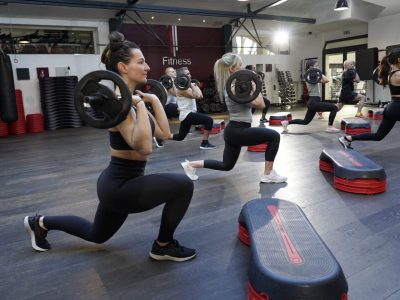
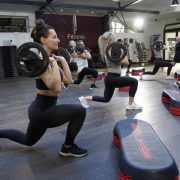
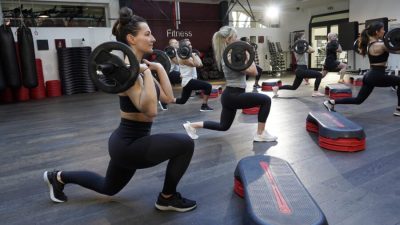
The Lunge Pattern: Single-leg locomotion and unilateral stability where one leg is positioned ahead of the other. This movement pattern directly translates to climbing stairs, walking up steep inclines, stepping over obstacles, or getting up from the ground.
-
The Push Pattern: Moving a resistance away from the torso, either horizontally or vertically. Pushing strength is essential for opening heavy doors, pushing a stalled vehicle, or lifting luggage into an overhead airplane compartment.
-
The Pull Pattern: Drawing a weight toward the body horizontally or vertically. This pattern is utilized when opening heavy sliding doors, pulling start cords on yard equipment, or picking up heavy objects toward the chest.
-
The Rotation and Anti-Rotation Pattern: Twisting through the thoracic spine or actively resisting rotational forces through the core. This is critical for swinging tools, putting on a seatbelt, turning to talk to someone behind you, or catching a falling object without twisting the spine awkwardly.
-
The Carry and Gait Pattern: Moving under load while maintaining postural control. Carrying groceries in both hands, holding a child on one hip, or moving furniture across a room relies entirely on loaded carry competence.
Building True Core Stability and Spinal Resilience
In conventional exercise regimens, core training is often reduced to floor crunches and sit-ups. These movements involve repetitive spinal flexion, which does little to stabilize the trunk against real-world external forces.
In functional fitness, the core is treated according to its true biological purpose: an anchor of stability that protects the spine and transfers power between the upper and lower extremities. Real-world core strength is largely about resisting unwanted movement rather than creating it.
Functional training emphasizes three key pillars of spinal protection:
-
Anti-Extension: Training the anterior abdominal wall to prevent the lumbar spine from overarching under load, such as during heavy lifting or overhead reaching.
-
Anti-Lateral Flexion: Strengthening the obliques and quadratus lumborum to prevent the torso from collapsing to the side when carrying an uneven load, like a heavy suitcase in one hand.
-
Anti-Rotation: Developing deep rotational stability through movements like the Pallof press, preventing the lower back from twisting violently during abrupt changes in direction.
By reinforcing these stabilizers, functional fitness builds a protective muscular corset around the spine, drastically reducing the incidence of chronic lower back pain and acute disc injuries caused by routine household chores.
Multi-Planar Movement and Joint Health
Most conventional gym exercises take place exclusively in the sagittal plane, moving forward and backward in straight lines, such as standard bench presses, leg curls, and stationary cycling. However, human life happens across three distinct geometric planes:
-
The Sagittal Plane: Forward and backward movements, such as walking, jogging, and basic bending.
-
The Frontal Plane: Side-to-side movements, such as stepping laterally, side shuffling, and ducking under obstacles.
-
The Transverse Plane: Rotational and twisting movements, such as pivoting on one foot, swinging an implement, or reaching across the body.
When physical training neglects the frontal and transverse planes, the stabilizing muscles around the hips, knees, and ankles become weak and uncoordinated. Functional fitness systematically incorporates lateral lunges, diagonal chops, multi-directional agility drills, and rotational medicine ball tosses.
Training across all three planes conditions joint capsules through their full anatomical ranges of motion. This builds thicker, more resilient cartilage, promotes the production of lubricating synovial fluid within joints, and reinforces the ligaments that prevent knee and ankle sprains during unexpected slips or uneven steps.
Enhancing Balance, Coordination, and Proprioception
Proprioception is the body ability to sense its position, orientation, and movement in space without looking. This internal sensory feedback relies on specialized mechanoreceptors located in muscles, tendons, and joints that send continuous data to the brain.
Sitting on fixed weight machines removes the need for proprioceptive feedback because the machine stabilizes the weight along a rigid track. In contrast, functional fitness uses free weights, kettlebells, suspension trainers, sandbags, and single-leg exercises that force your nervous system to stabilize the load actively.
-
Unilateral Training: Performing single-leg Romanian deadlifts or single-arm dumbbell presses forces each side of the body to support weight independently, eliminating subtle strength discrepancies between the left and right sides.
-
Dynamic Stability: Exercises that require catching a medicine ball or balancing on one leg while moving the upper body train the central nervous system to make split-second micro-adjustments in muscle recruitment.
-
Vestibular Integration: Moving the head and changing eye focus while maintaining balance during complex movement combinations improves overall equilibrium and spatial awareness.
This heightened neuromuscular coordination translates directly into fall prevention, improved athletic agility, and greater physical confidence when navigating crowded spaces or treacherous terrain.
Preserving Functional Independence and Vitality
As individuals age, they naturally experience sarcopenia (the loss of muscle mass) and dynapenia (the loss of muscle strength and power). However, the greatest threat to healthy aging is not simply a loss of muscle volume, but the loss of movement competence. When simple actions like getting up from a low chair, climbing stairs without a handrail, or carrying groceries become difficult, personal autonomy quickly diminishes.
Functional fitness directly counters physical decline by prioritizing movements that maintain everyday independence:
-
Preserving Type II Muscle Fibers: Fast-twitch muscle fibers, which are responsible for quick, powerful contractions, are the first to degrade with age. Functional exercises that incorporate moderate speed and power, such as medicine ball slams and kettlebell swings, keep these fibers active so you can quickly catch your balance during a stumble.
-
Maintaining Bone Density: Ground-based, weight-bearing functional exercises apply multi-directional mechanical stress to the femur, pelvis, and lumbar spine, stimulating osteoblast activity and helping prevent osteopenia and osteoporosis.
-
Elevating Metabolic Efficiency: Because functional movements recruit multiple large muscle groups simultaneously, they demand substantial caloric energy and oxygen uptake, enhancing insulin sensitivity and cardiovascular health without requiring hours of tedious cardio.
By focusing on movement quality rather than isolated muscle fatigue, functional fitness equips people of all ages to live actively, comfortably, and independently.
Frequently Asked Questions
How does functional fitness differ from traditional bodybuilding?
Bodybuilding prioritizes muscular hypertrophy, symmetry, and aesthetic definition, often utilizing isolation exercises and machines to fatigue specific muscles to exhaustion. Functional fitness prioritizes movement efficiency, multi-joint integration, dynamic stability, and practical strength across multiple planes of motion, emphasizing how the body performs in real-world environments rather than how individual muscles look.
What equipment is most useful for building a functional training routine at home?
A functional home workout space requires minimal, versatile equipment that permits free movement. Highly effective tools include adjustable kettlebells, a pair of moderate-weight dumbbells, resistance bands of various tensions, a suspension trainer like a TRX system, and a weighted medicine ball. These tools allow for squatting, hinging, pushing, pulling, rotating, and loaded carries in compact spaces.
Can functional fitness exercises help correct chronic postural imbalances from desk work?
Yes. Desk work keeps the body locked in hip flexion with internally rotated shoulders and a forward head position. Functional training counters this by strengthening the posterior chain through hip hinges and glute bridges, mobilizing the thoracic spine with rotational exercises, and strengthening the rhomboids, middle trapezius, and rear deltoids through functional rowing and face-pull movements.
How does functional training improve neuromuscular efficiency compared to machine-based exercises?
Fixed machines dictate the movement path and stabilize the weight for you, which downregulates the need for stabilizer muscle recruitment. Functional exercises require the central nervous system to synchronize prime movers, synergists, and stabilizing muscles simultaneously, improving motor unit recruitment, rate coding, and intermuscular coordination so the body acts as a unified system.
Is functional fitness safe for individuals with pre-existing joint osteoarthritis?
When properly scaled and supervised, functional fitness is beneficial for osteoarthritis. Low-impact, controlled functional movements strengthen the surrounding muscles that support and decompress arthritic joints, stimulate synovial fluid production to lubricate cartilage, and reduce joint stiffness. Exercises can be modified to comfortable ranges of motion to avoid painful flare-ups.
How often should someone perform functional fitness workouts each week to see results?
For most healthy adults, completing three full-body functional fitness sessions per week, lasting forty-five to sixty minutes each, provides an optimal balance of training stimulus and physiological recovery. This frequency allows individuals to train every primary movement pattern multiple times per week while leaving adequate time for tissue repair and adaptation.
What role does the transverse plane of motion play in real-world performance?
The transverse plane involves all rotational movements along the longitudinal axis of the body. In daily life and sports, almost every dynamic movement—from throwing a ball and swinging a golf club to vacuuming a rug and turning while carrying an object—involves rotation. Training the transverse plane strengthens the oblique abdominal musculature, mobilizes the hips and thoracic spine, and prevents shearing stresses across the lumbar spine.
What is your reaction?
Excited
0
Happy
0
In Love
0
Not Sure
0
Silly
0